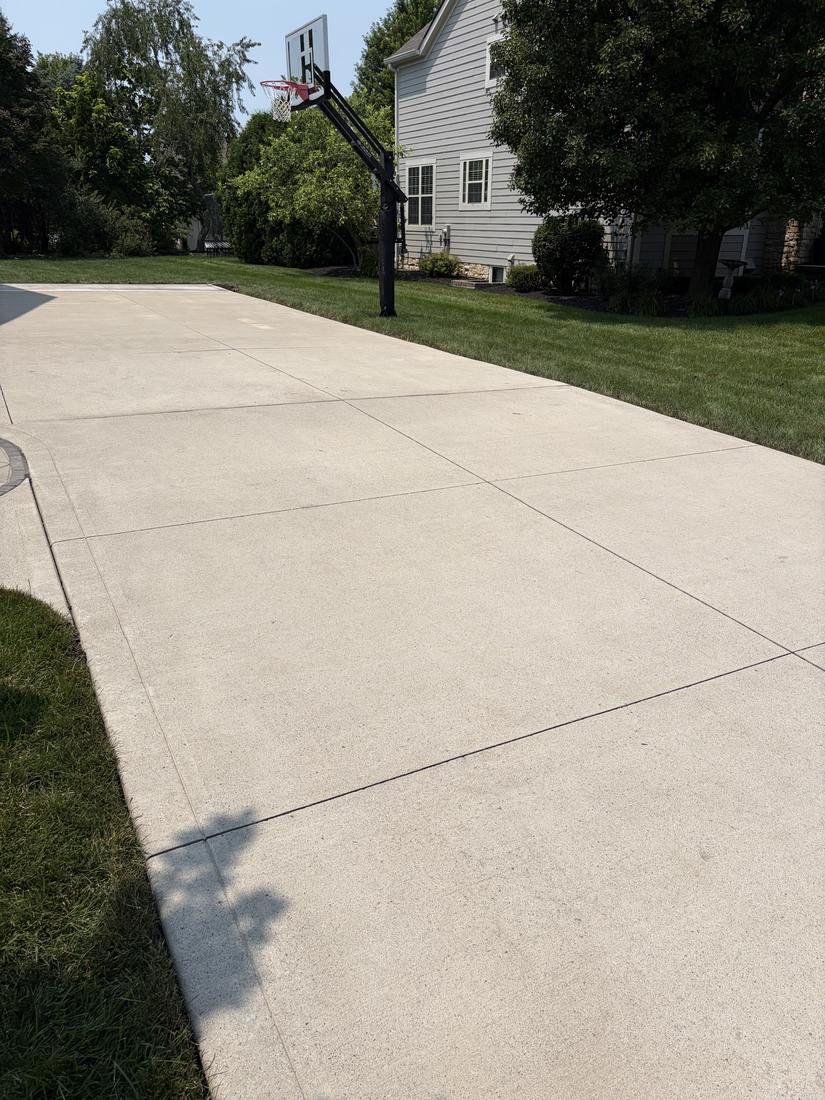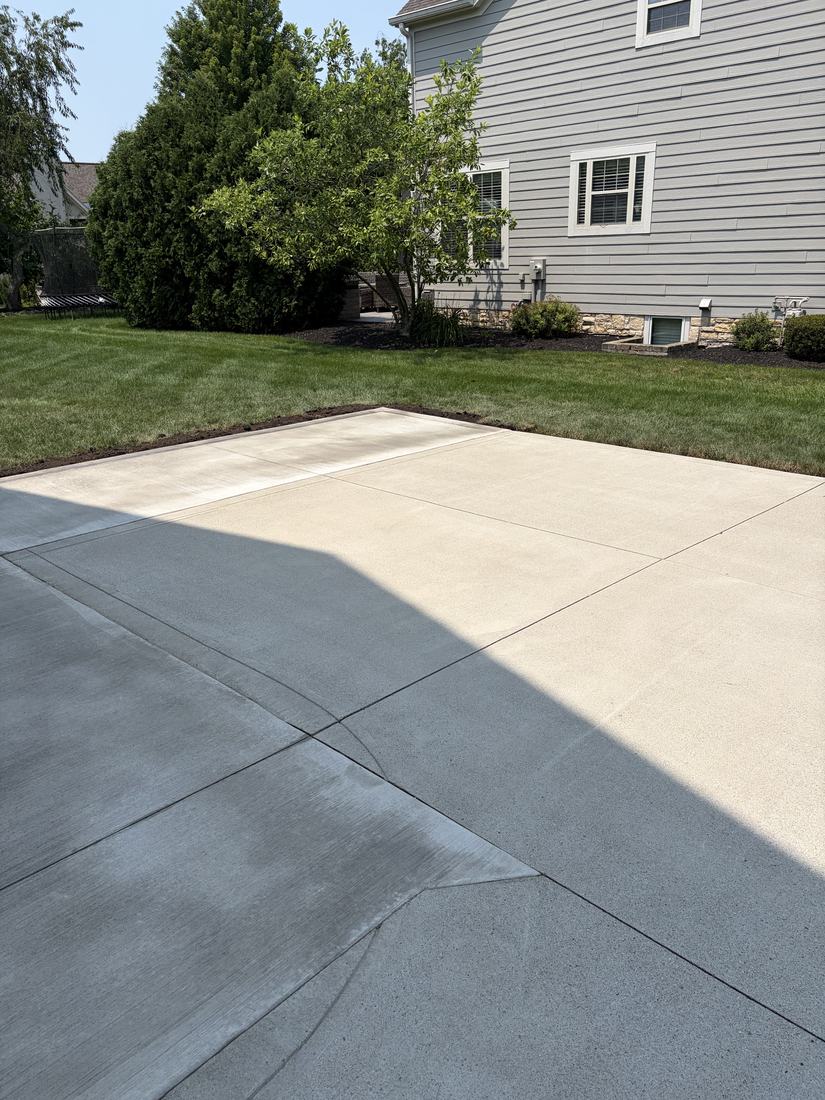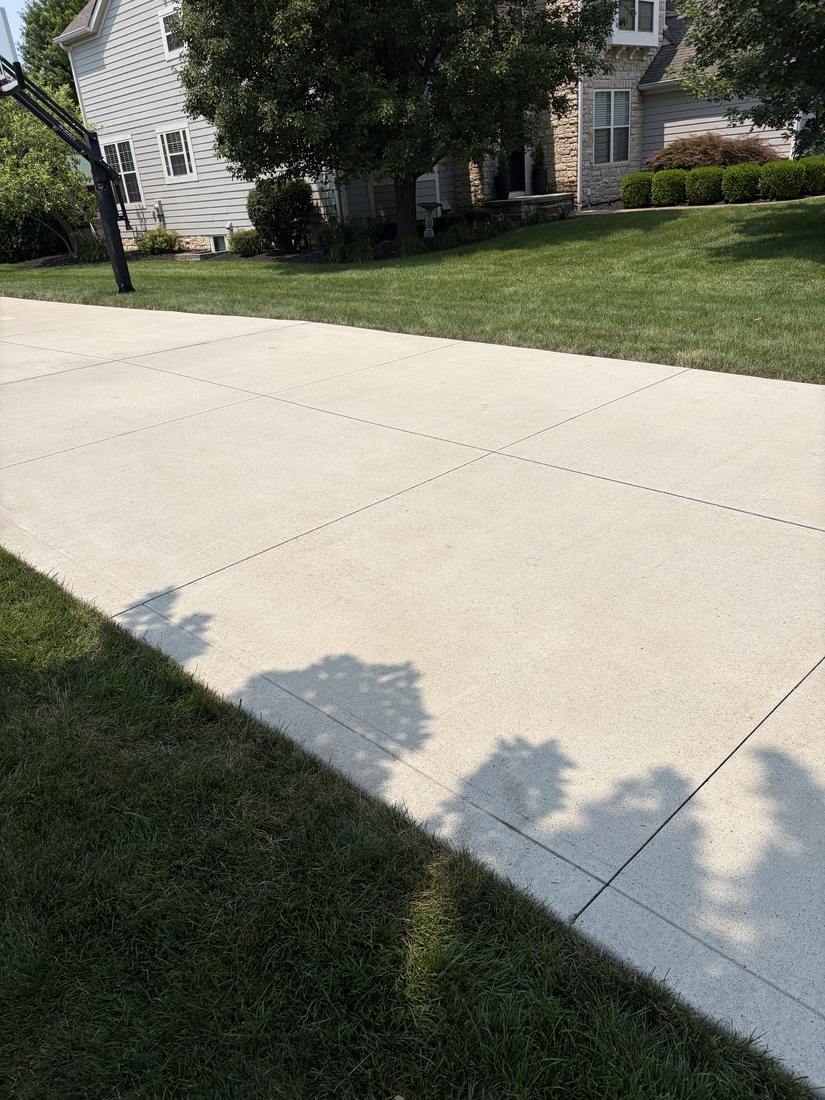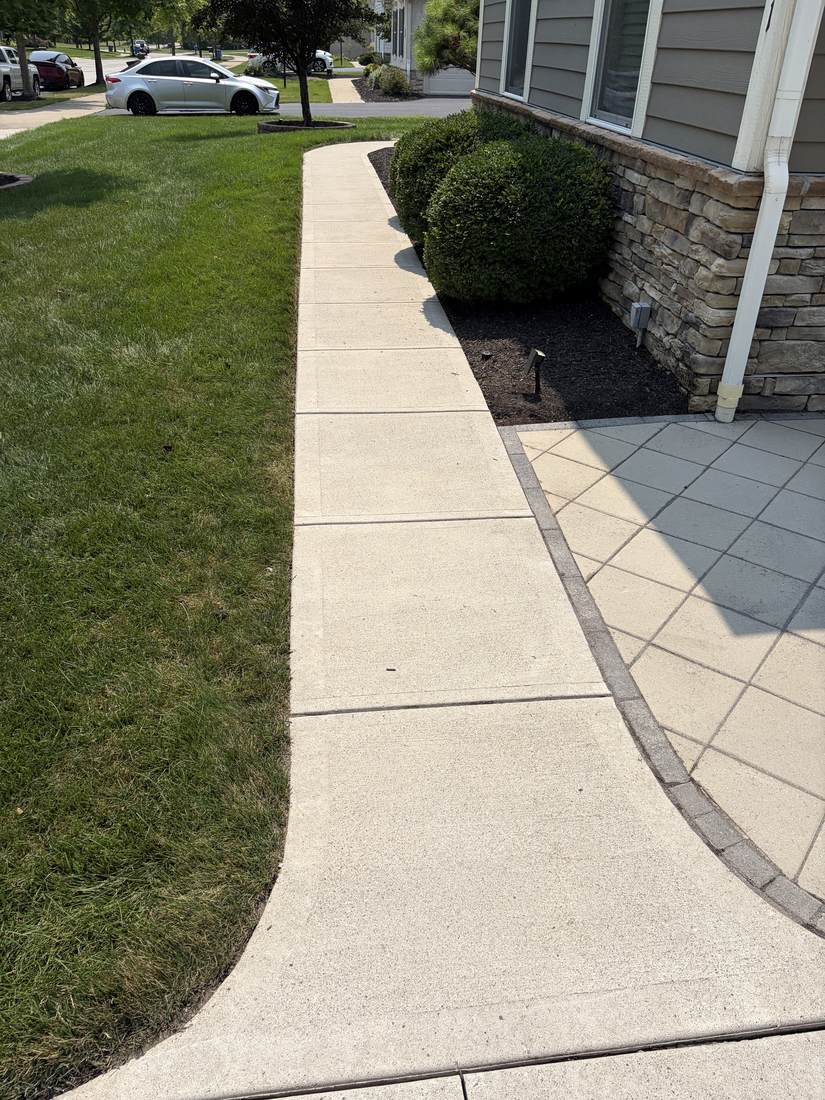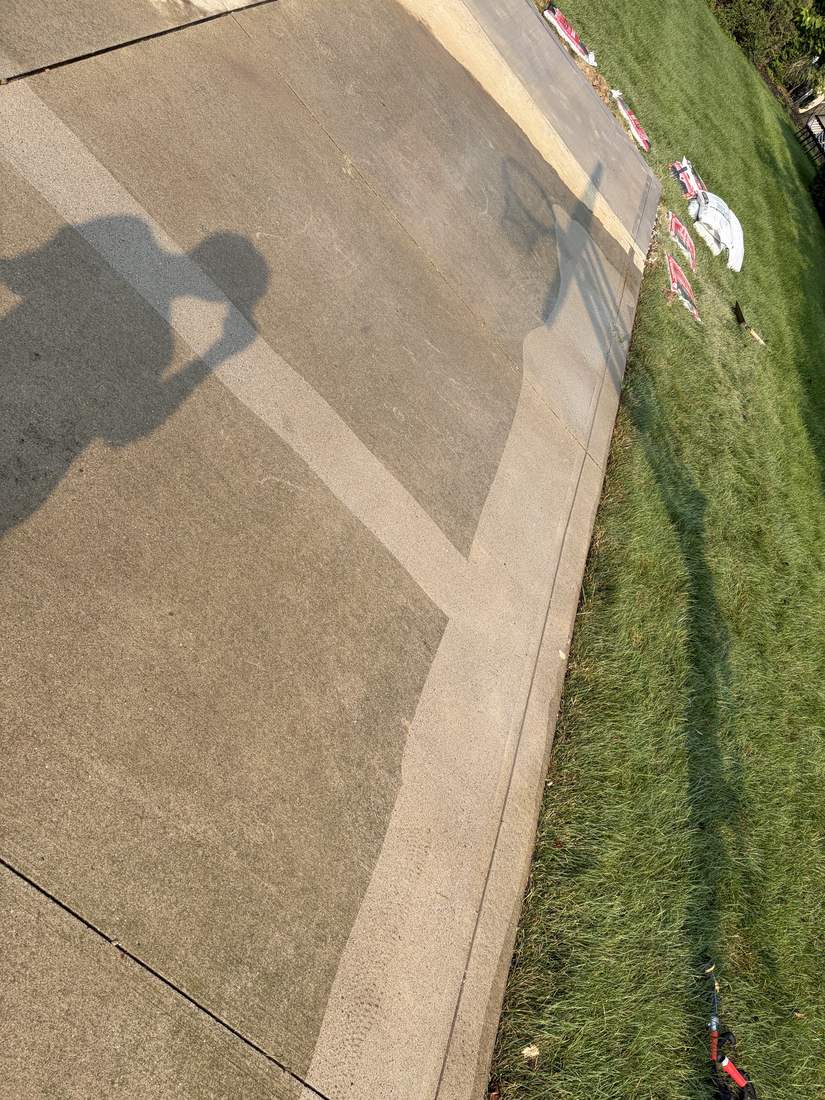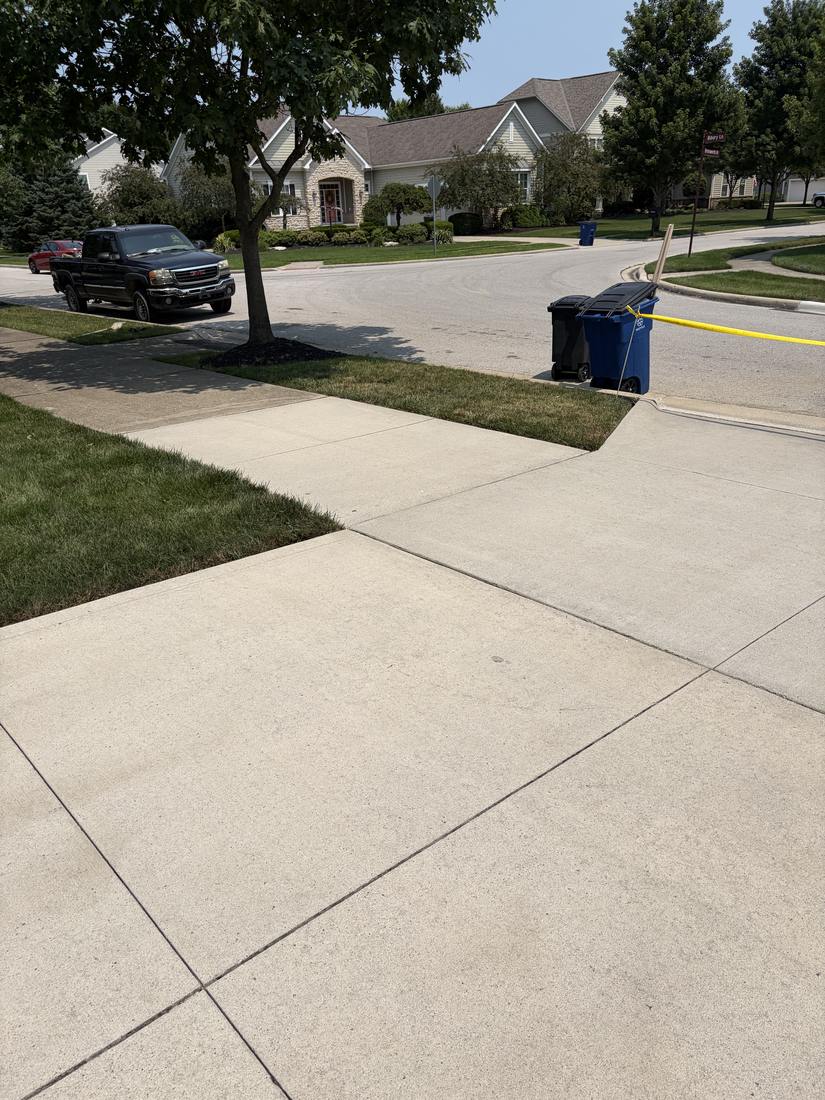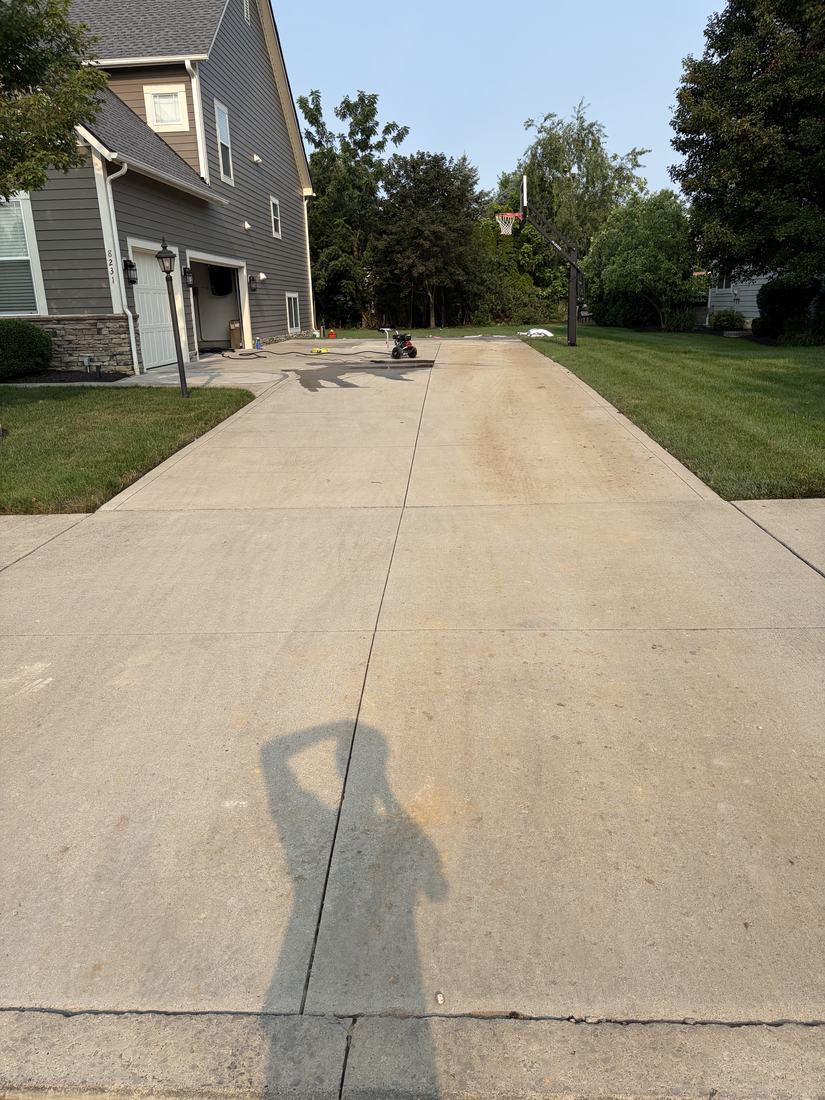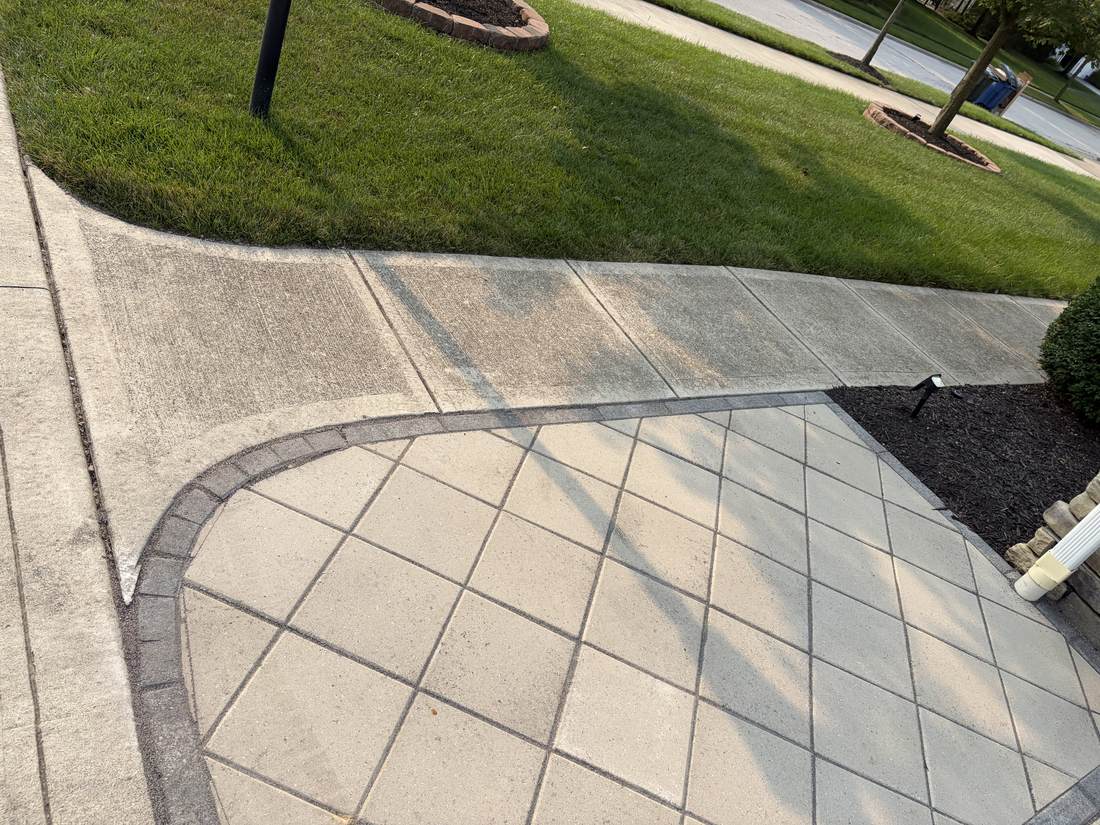
Most concrete isn't worn out. It's dirty.
A gray, streaked driveway usually still has good concrete under it. What you're looking at is road film, tire rubber, algae in the low spots and years of dirt sitting in the surface. A proper wash takes that off and the slab looks years newer, for a fraction of what replacing it costs.
It's also the cheapest way to find out what you're actually dealing with. Once a driveway is clean you can see whether it needs sealing, a repair, or nothing at all.
What we wash
- Driveways and aprons, cleaned out to the curb
- Walks, steps and patios, including the green algae film on shaded slabs
- Siding, washed at low pressure with the right cleaner instead of blasted
- Decks and fences, wood or composite, at a pressure that won't fuzz the boards
- Stamped and colored concrete, cleaned without stripping the color
Pressure is not the point.
A lot of damage gets done by people who think more pressure is better. Too much pressure etches concrete, tears up wood grain and drives water behind siding. Siding and decks get low pressure and the right cleaner. Flatwork gets a surface cleaner, which is what gives you an even finish instead of those wand stripes across the driveway.
Wash, then seal
Washing opens up the surface, and that's the right moment to seal it. Sealer only bonds to clean, dry concrete, so doing both in one visit costs less than two trips and adds years to the slab. It's our most popular maintenance package: wash the driveway, walks and patio, then seal.
When to do it
Spring, to get winter's salt and grime off. Or fall, to clean and seal before the salt goes down. Either beats letting it sit.