Epoxy fails for one reason: prep.
Almost every peeling garage floor you've seen was rolled straight onto a slab that was dusty, sealed, oily or damp. Epoxy doesn't soak into concrete the way a sealer does. It grips what's on the surface, so whatever is on that surface is what it's holding onto.
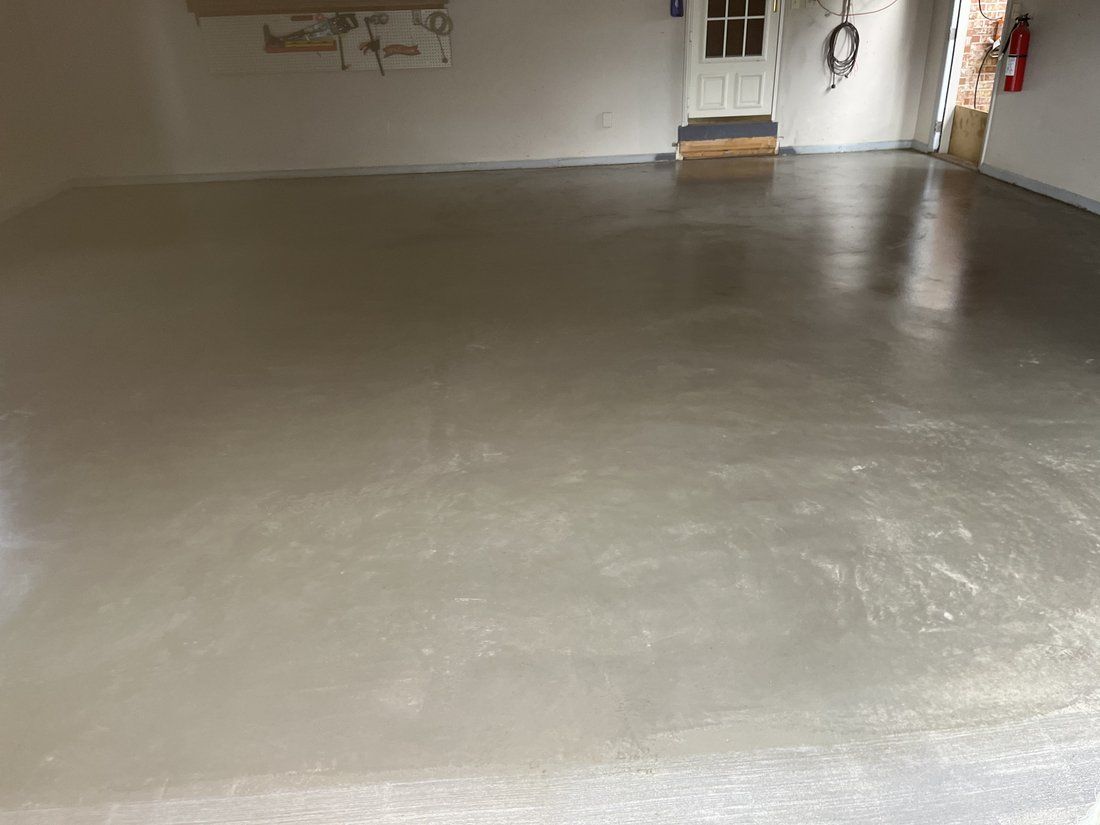
So the coating is the last thing we do. First the floor gets ground or acid-etched open, oil spots get degreased, cracks and pits get filled, and we check for moisture coming up through the slab. On a garage that's most of the first day.
What you get out of it
- Nothing soaks in. Oil, brake fluid, antifreeze and road salt sit on top and wipe off
- No more concrete dust off a bare slab and onto everything in the garage
- Sweeps and mops clean instead of needing a hose and a stiff brush
- Brighter — a light floor bounces the light around and makes a garage feel finished
- Hot-tire resistant when it's a proper epoxy system, not a big-box kit
Three systems
Solid color is the most affordable and the cleanest look. Flake or chip broadcasts colored flakes into the wet coat, which hides dirt and tire marks and adds grip — it's what most homeowners pick. Metallic is a poured, marbled finish for show garages and finished basements, and it's the most involved to install.
New floor or the one you have
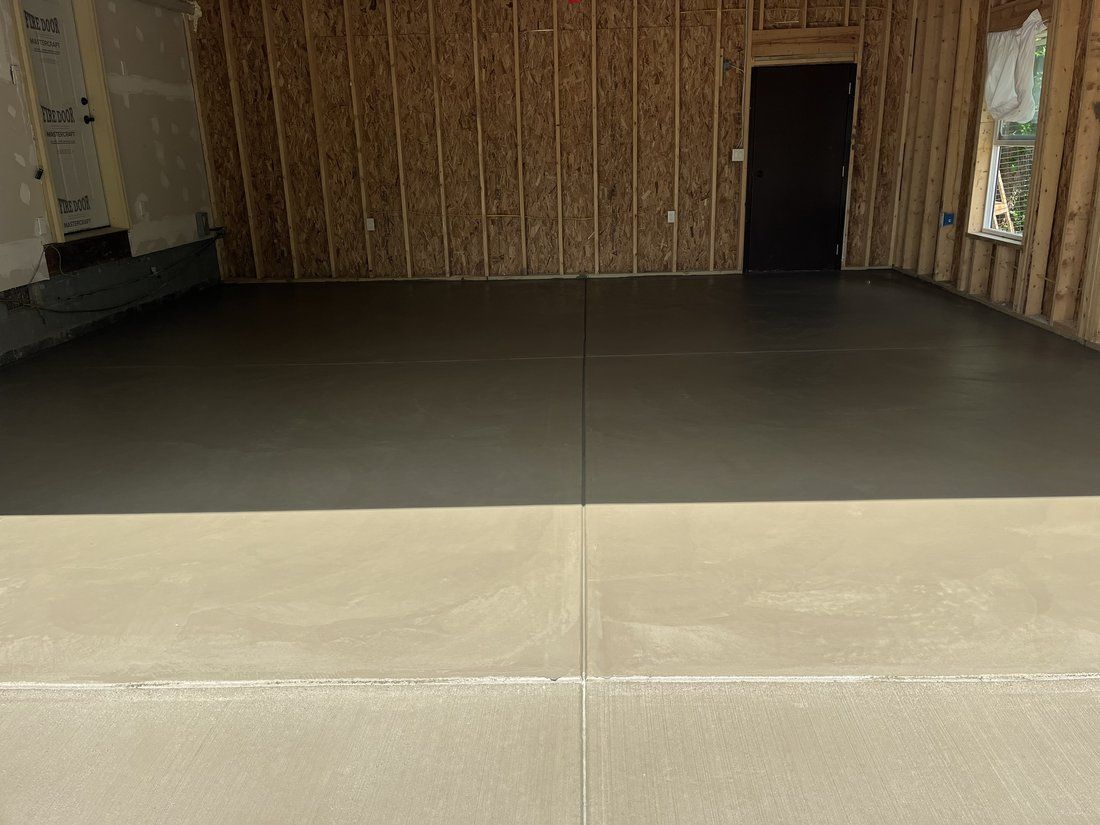
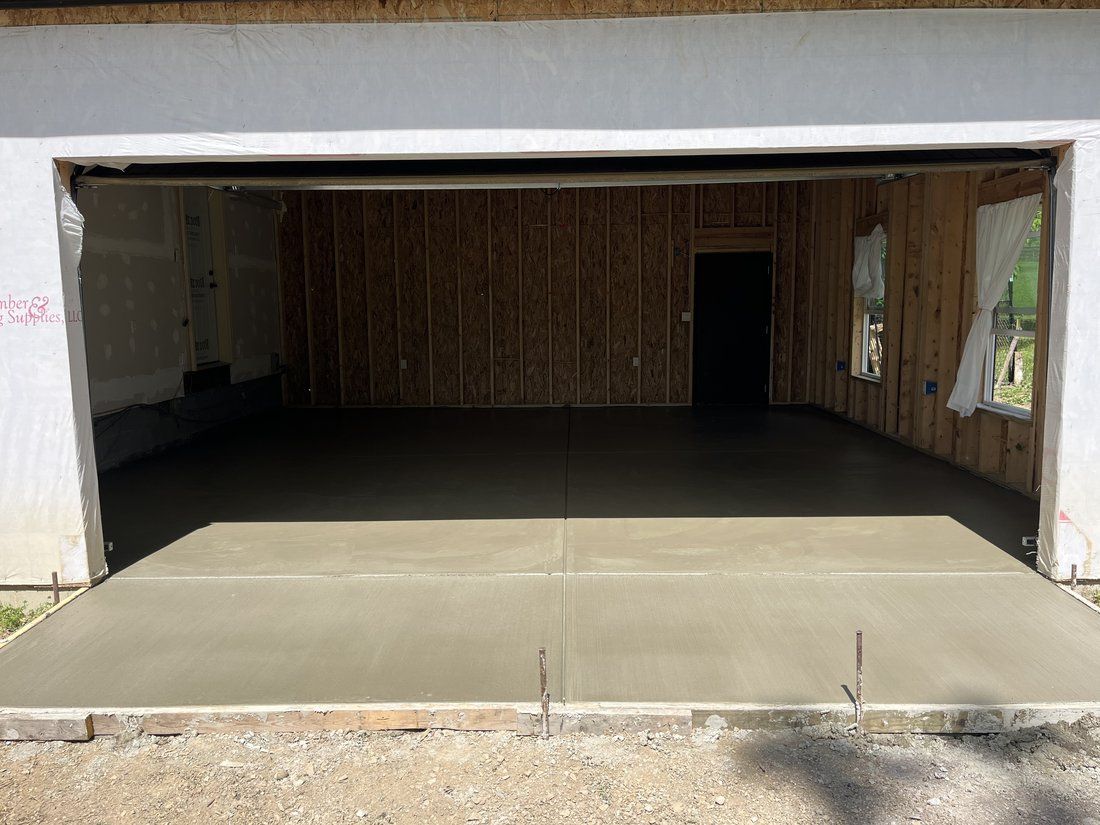
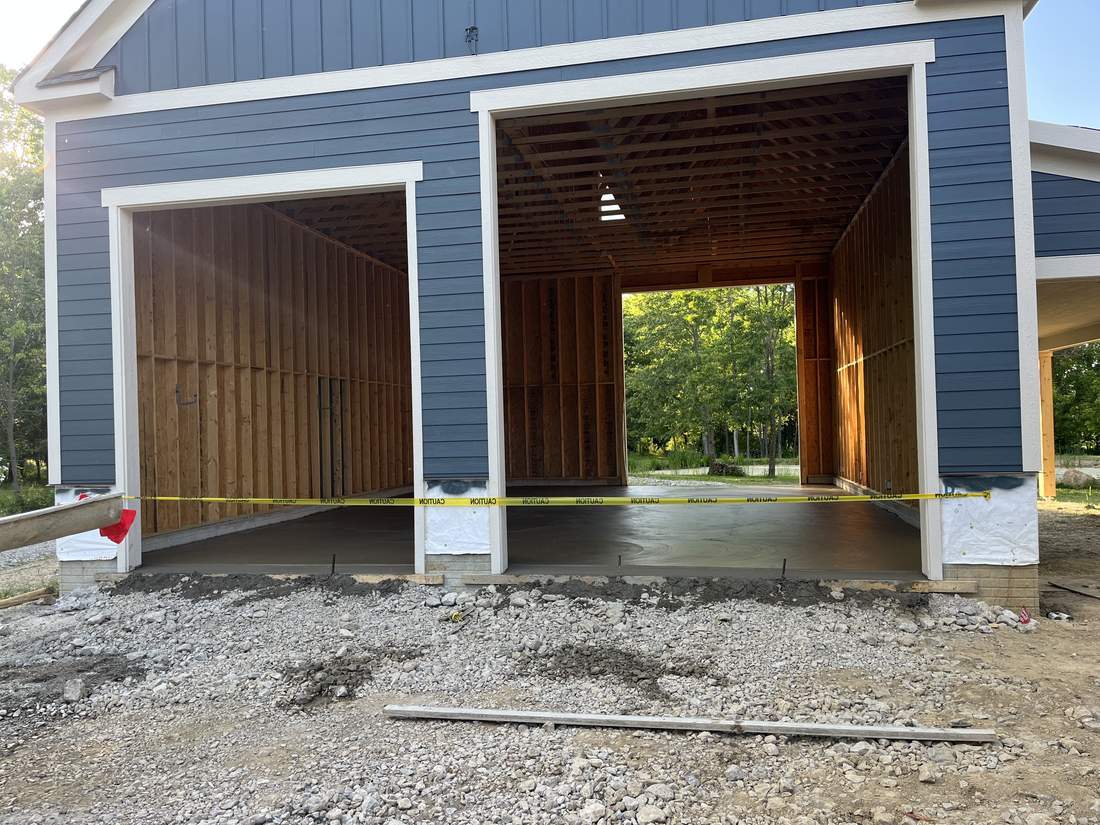
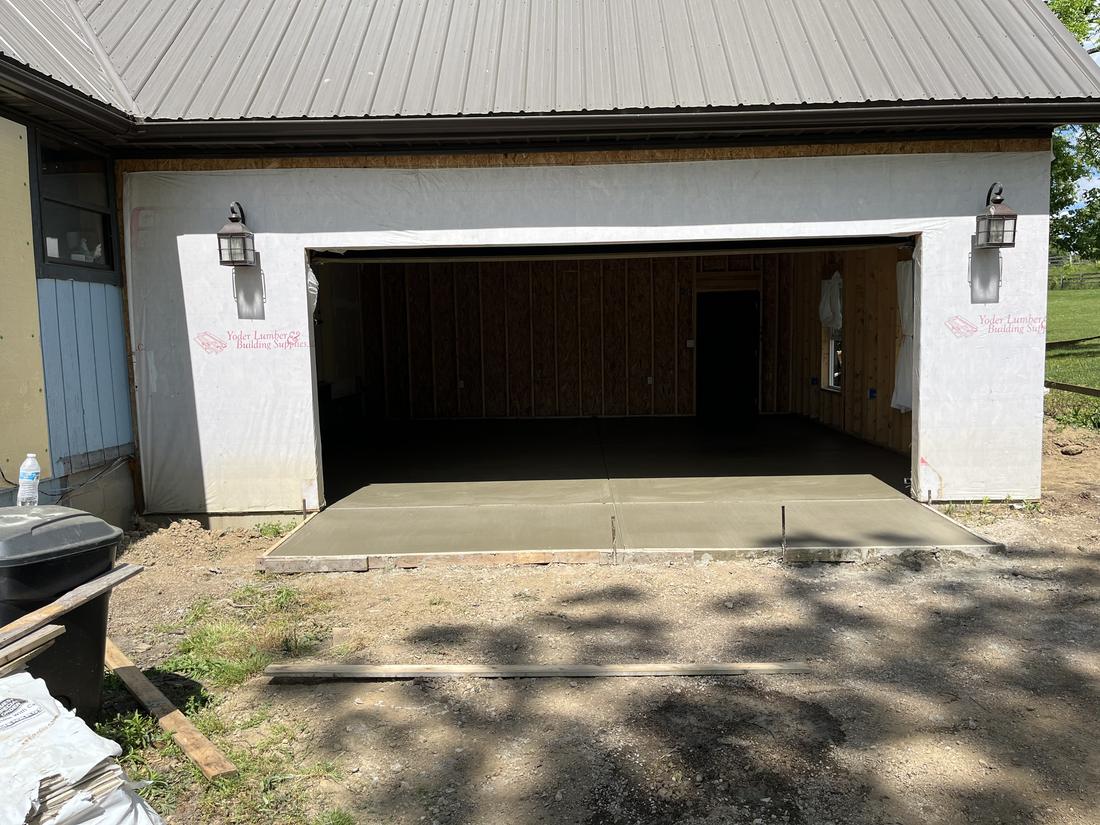
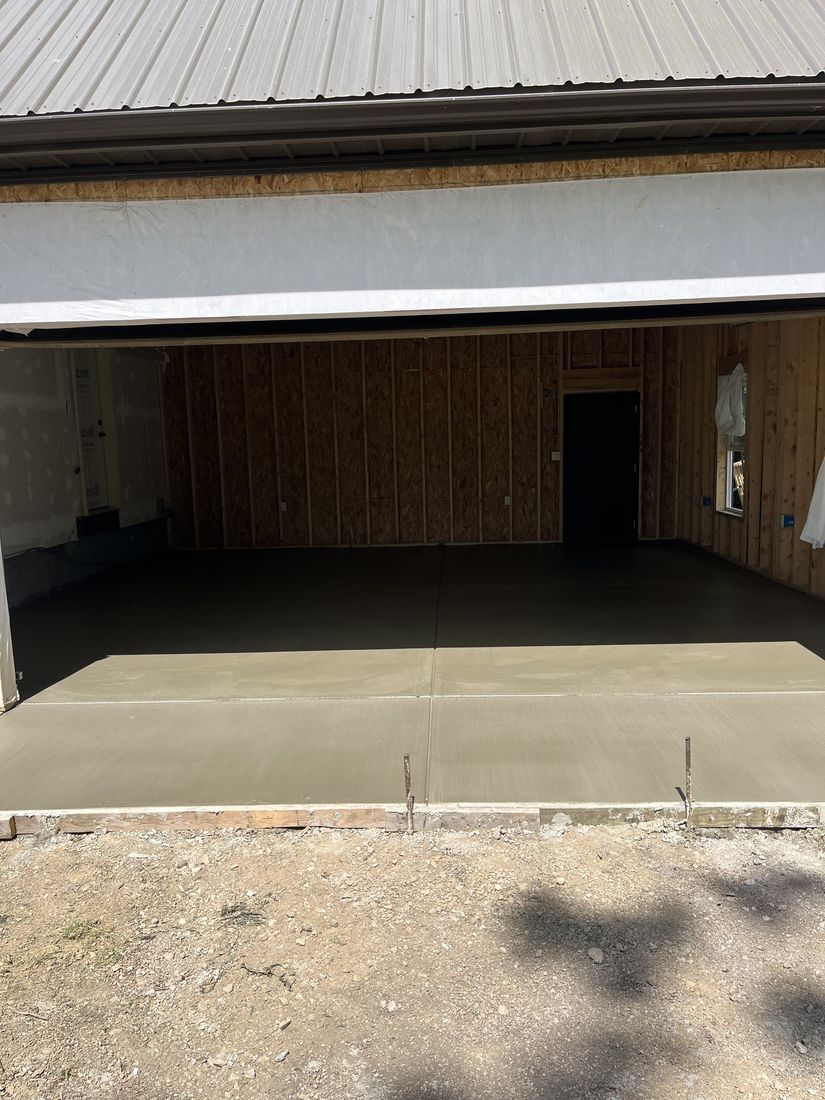
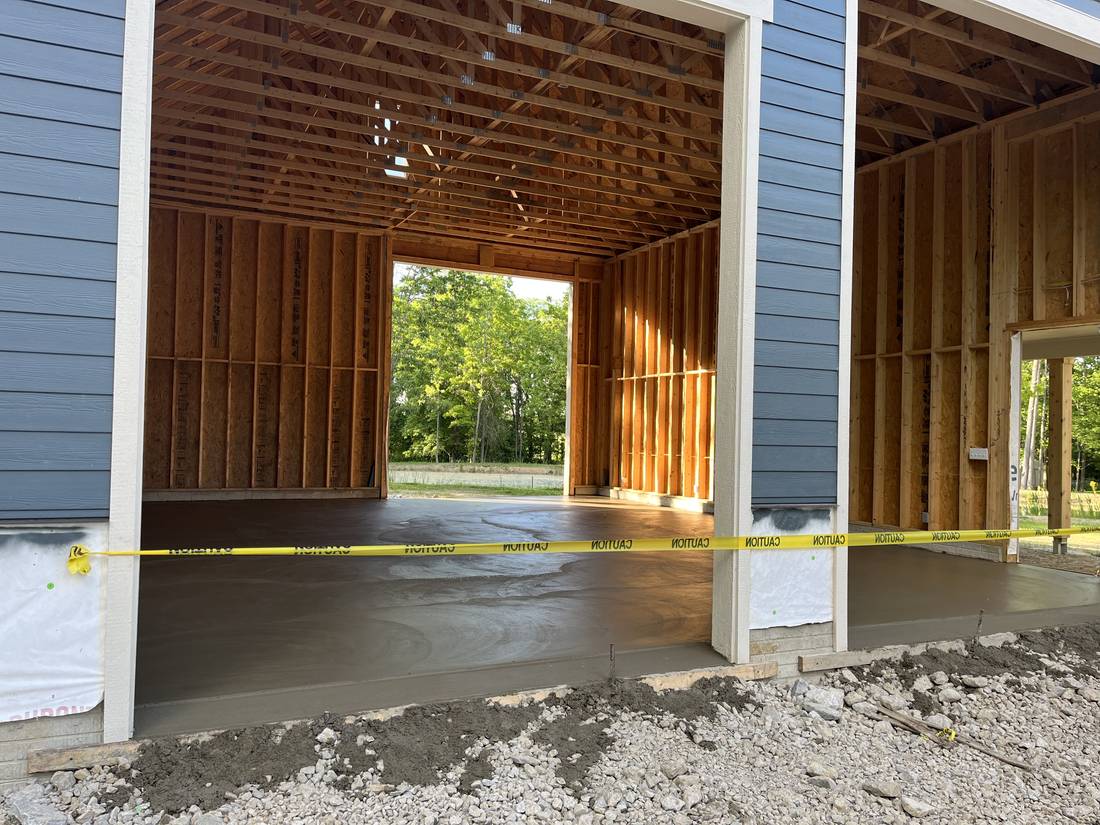
If we're pouring the slab anyway, coating it while we're on site is the cheapest time to do it. An existing floor works too, as long as it's structurally sound — we'll tell you straight if a floor is too far gone to coat, because putting epoxy over a failing slab just hides the problem for a season.
How long it takes
Most two-car garages are a two-day job: prep and repairs, then coat. Walk on it the next day, park on it after about a week. We'll give you exact times for your floor, since temperature changes how epoxy cures.