Start with how you'll use it.
A patio is sized around furniture and foot traffic, not the other way around. A table for six needs more room than most people expect once the chairs are pulled out, and a grill wants space away from the house. We'll walk the yard with you, mark it out, and talk through where water goes before anything is dug.
What we pour
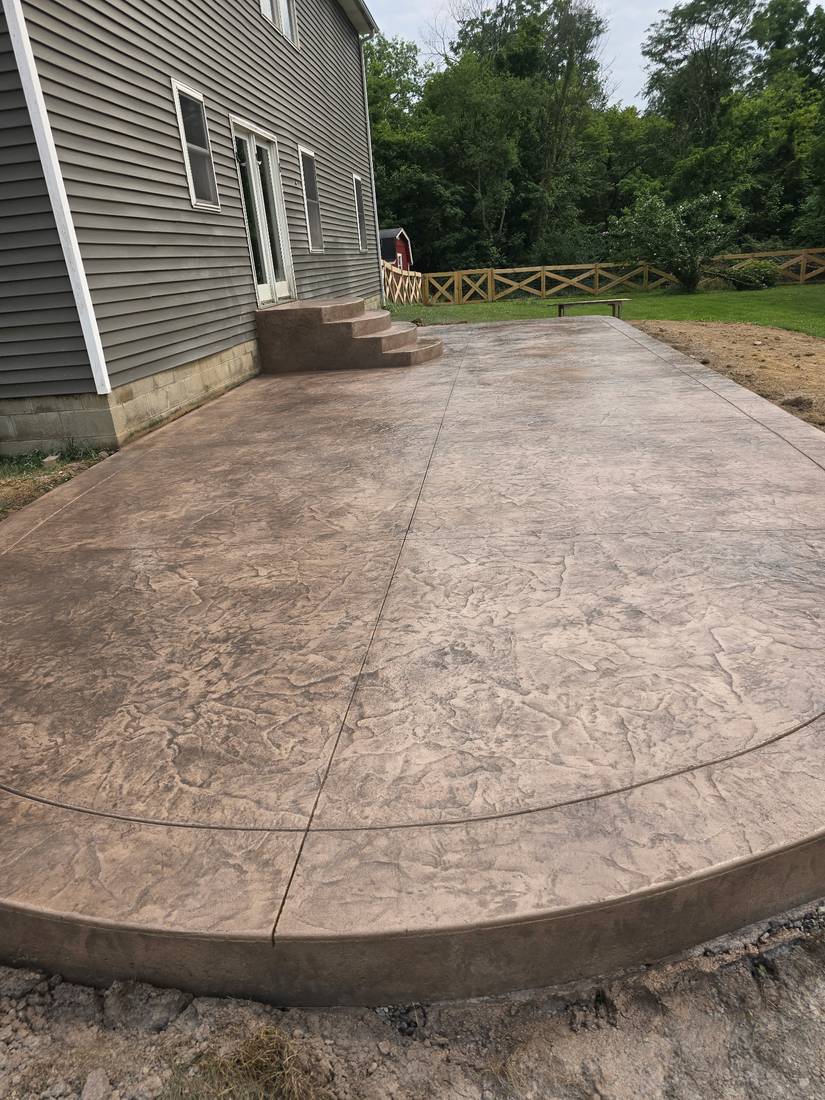
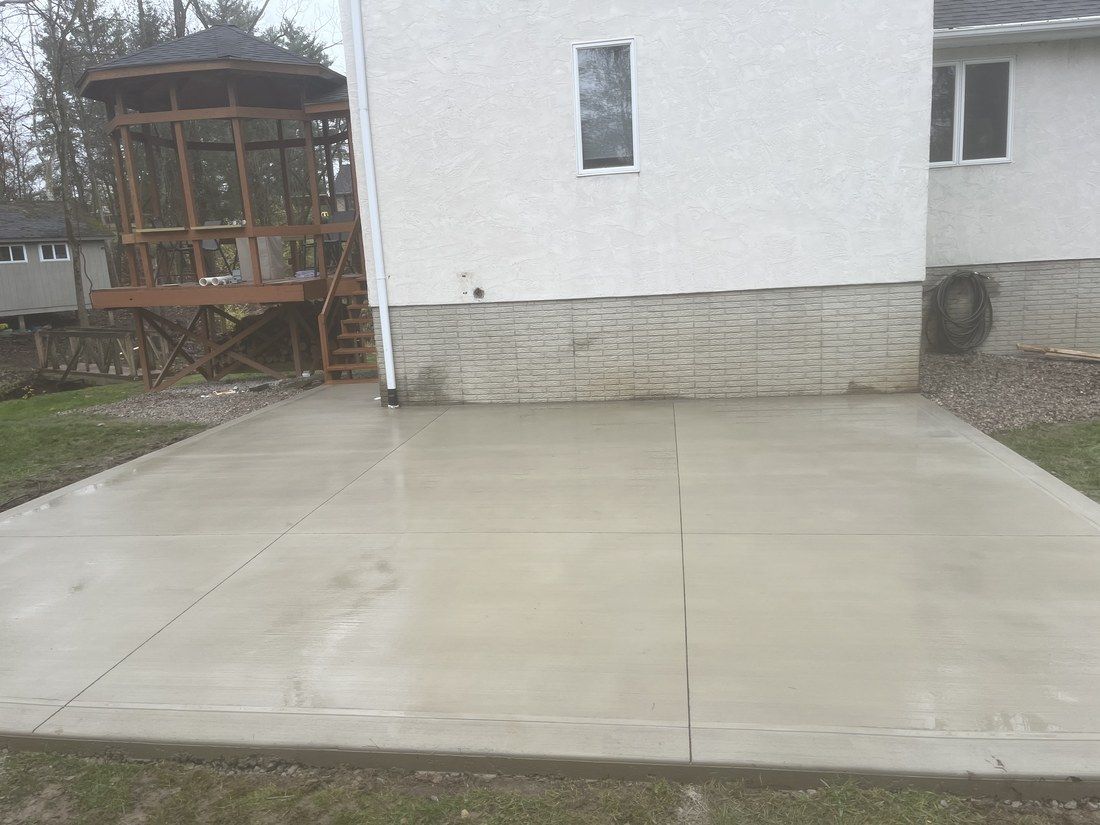
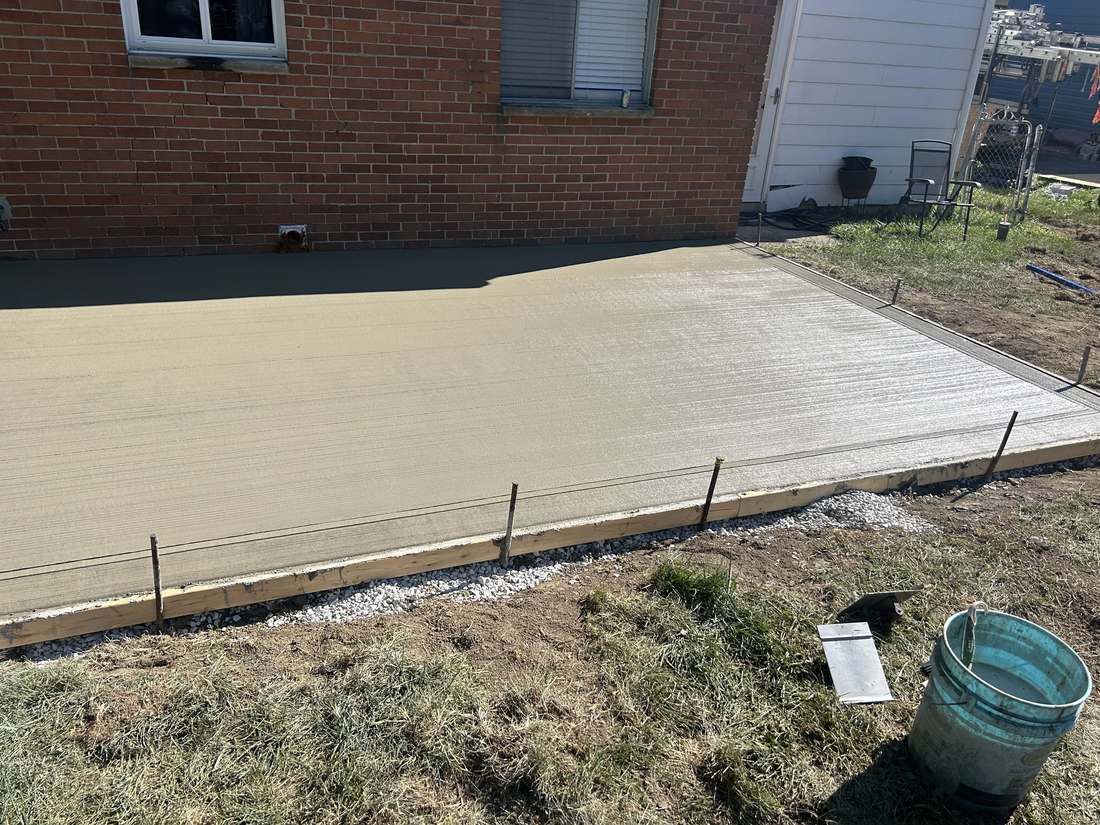
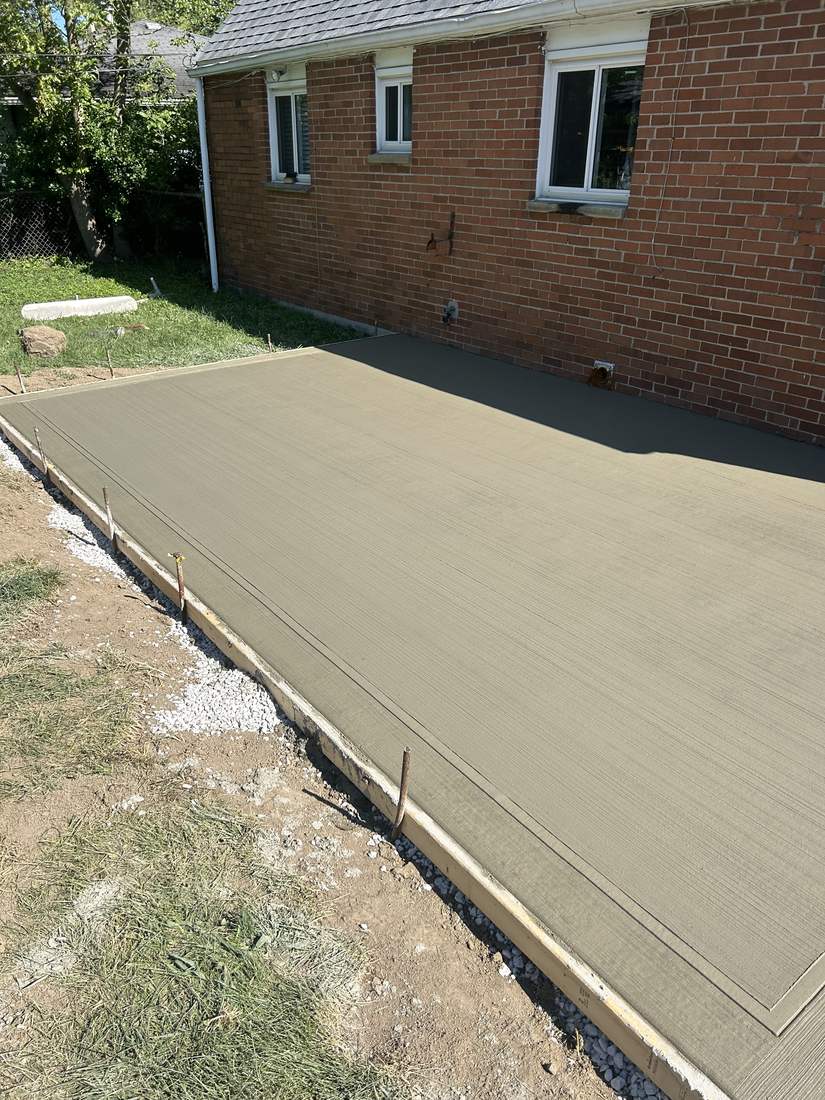
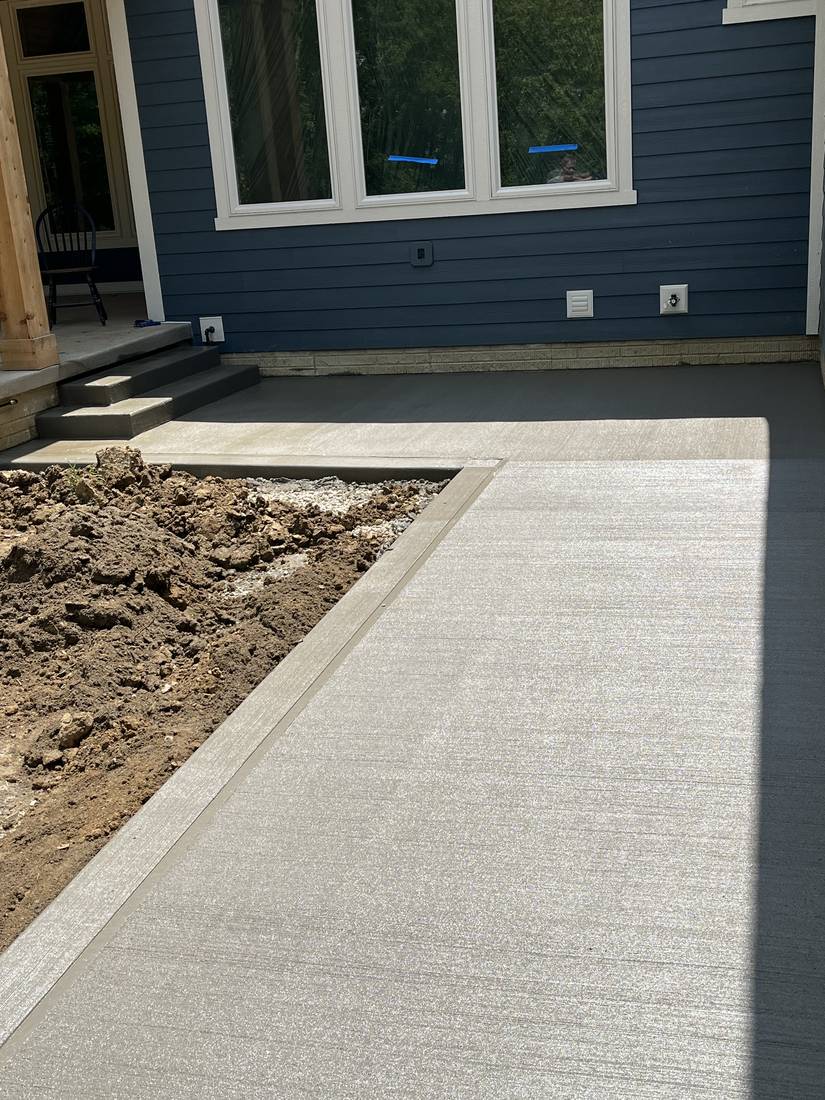
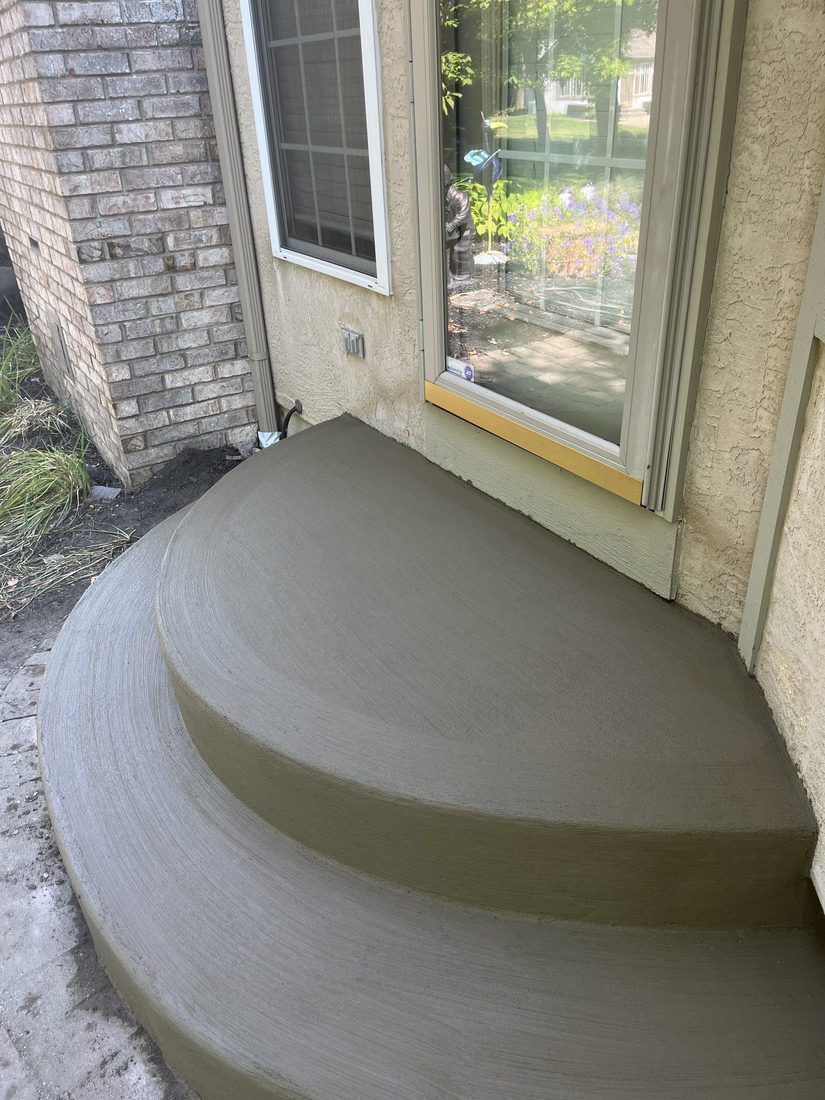
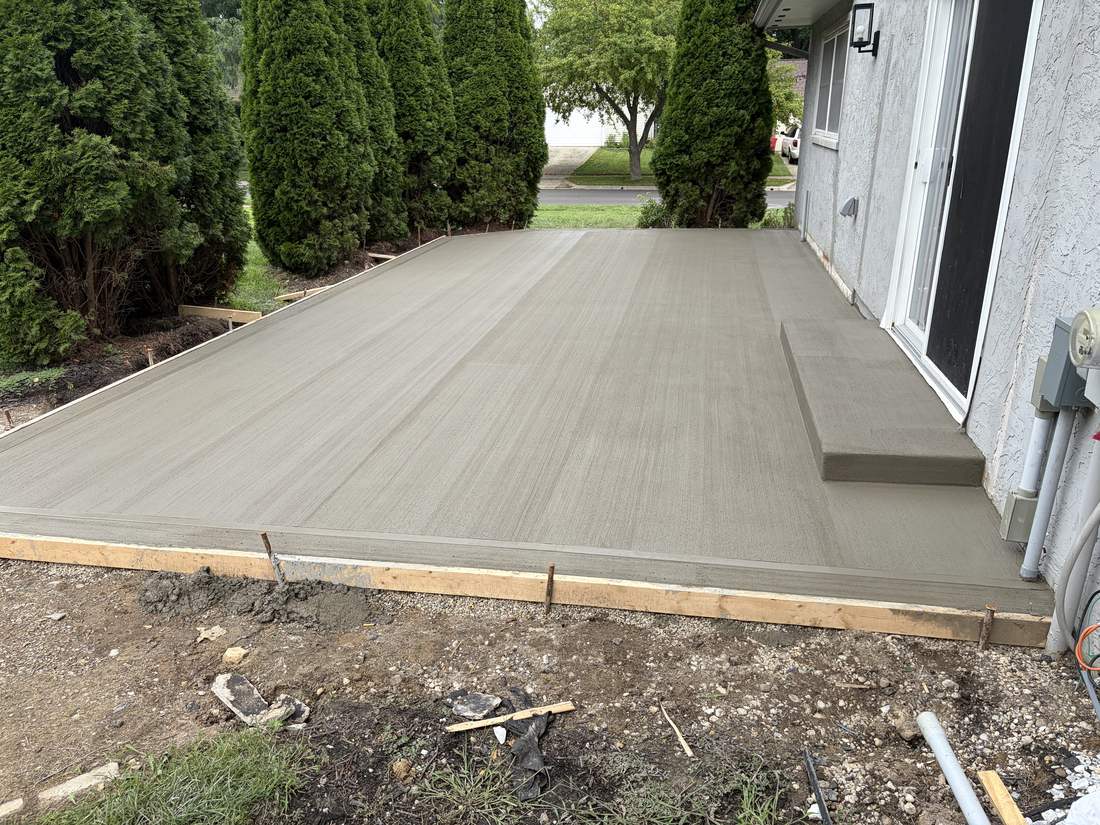
- Back patios: square, curved or wrapped around a sunroom or bay window
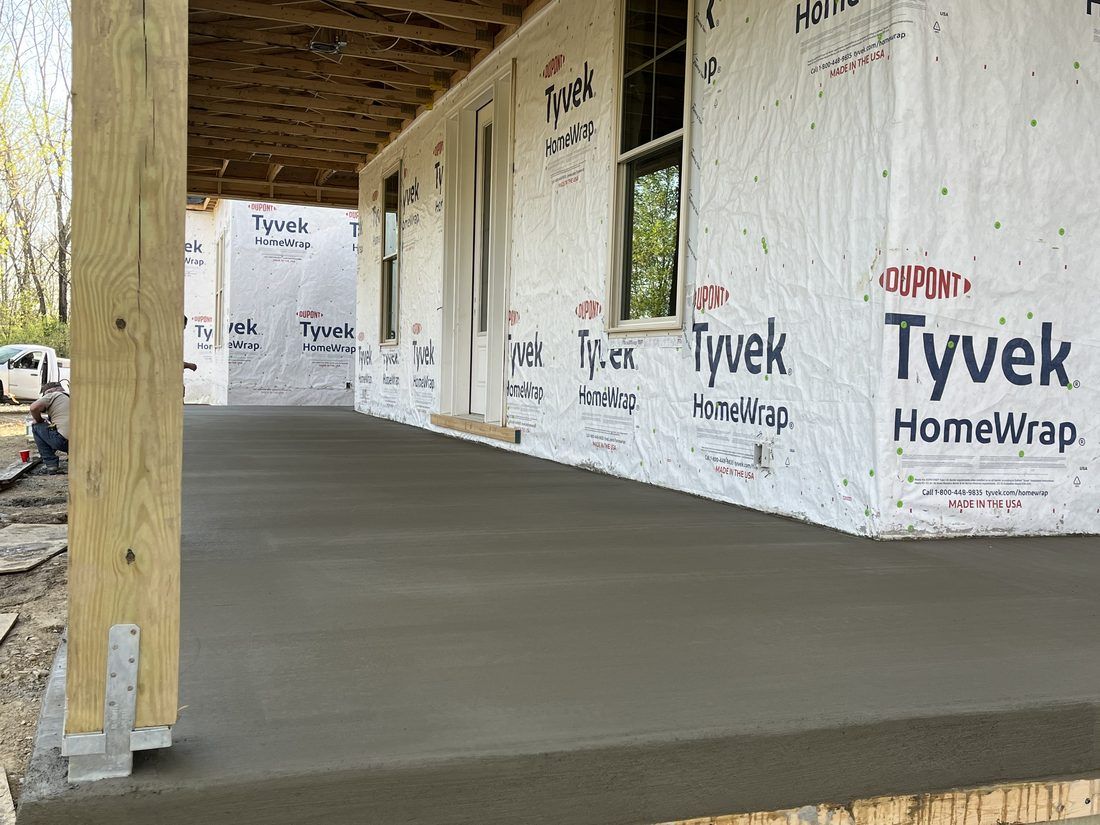
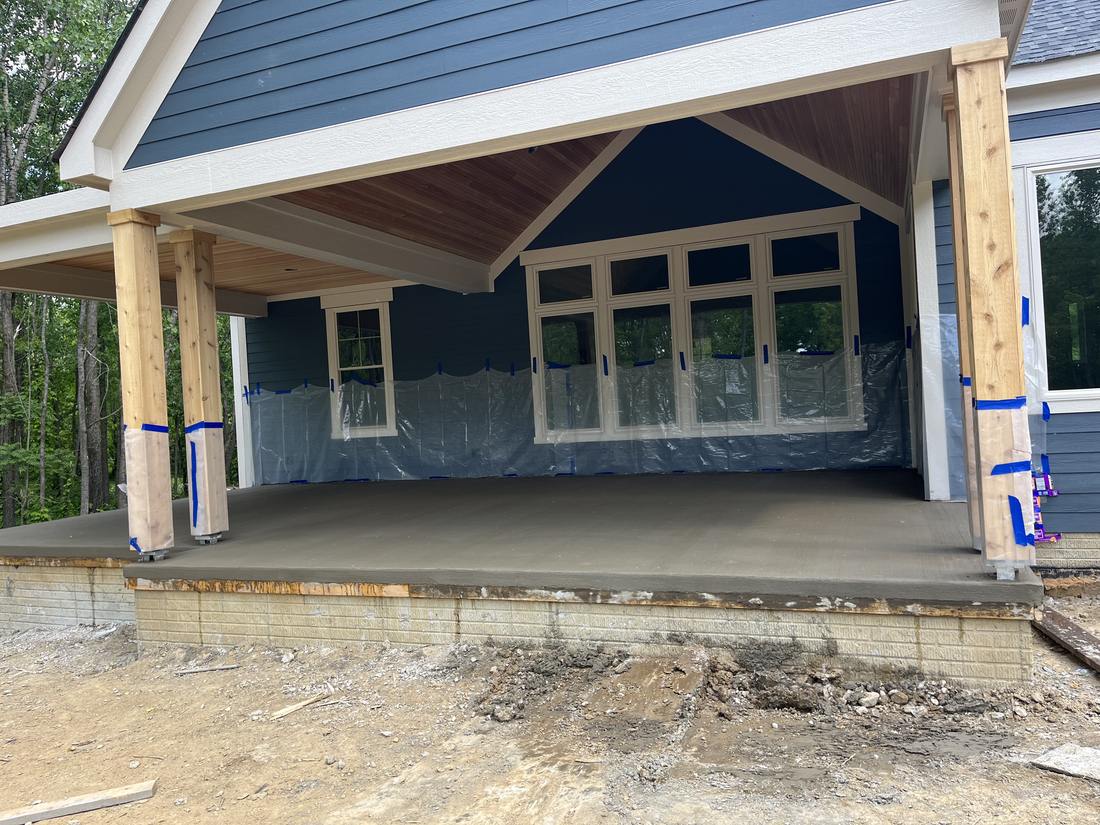
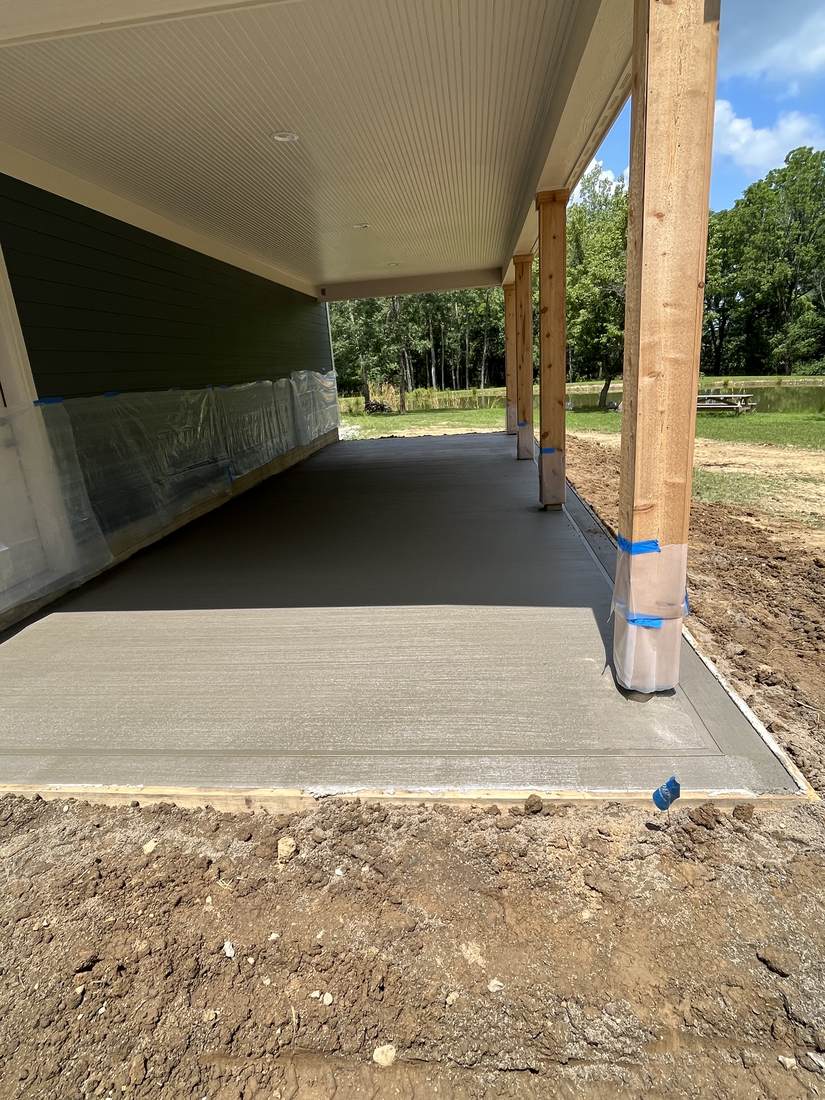
- Covered porches: slabs for new-build porches, pole barn porches and wraparounds
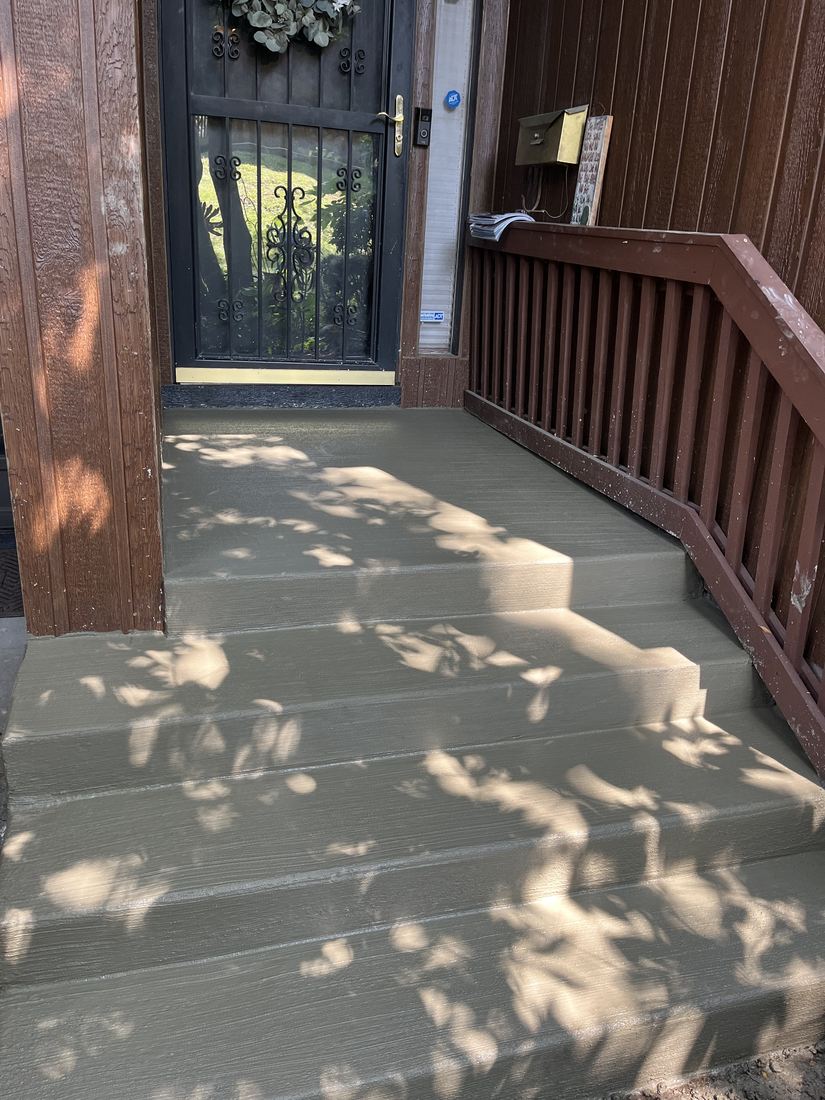
- Front stoops and landings, sized to meet code at the door
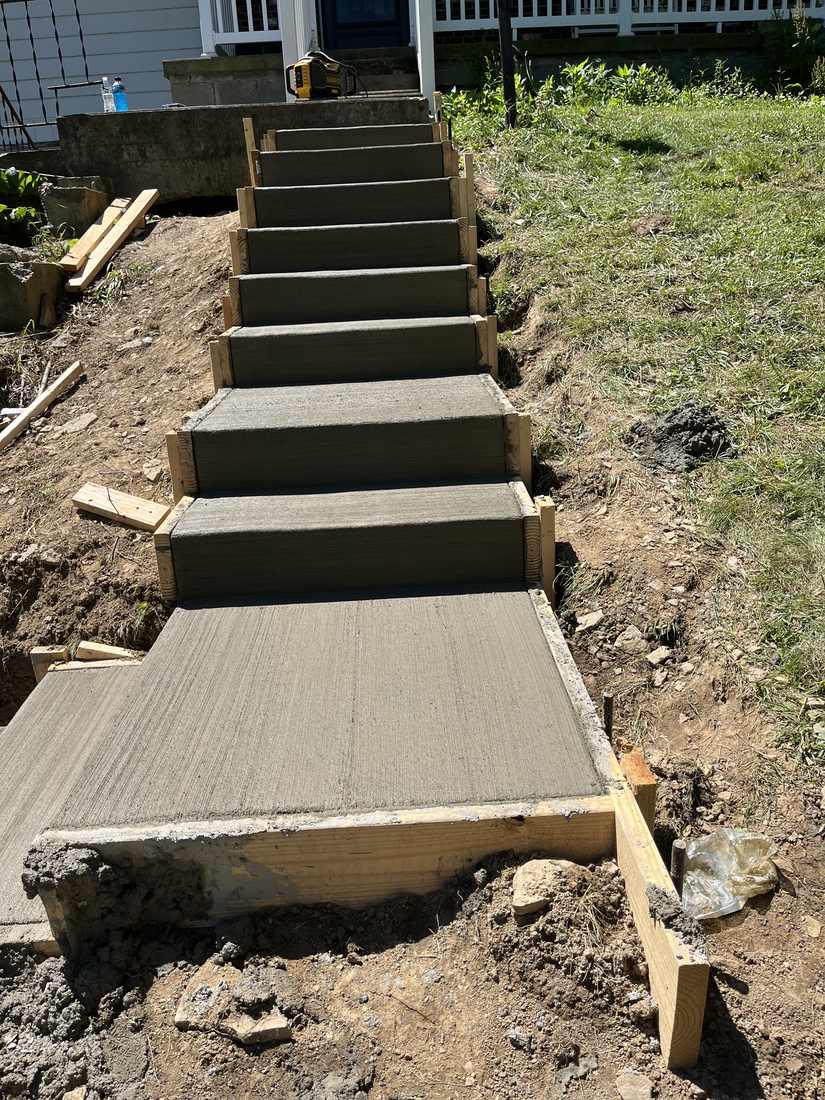
- Poured steps: straight, radius or hillside runs, formed on site
- Patios under decks, which turn dead space into a usable dry area
- Resurfaced porches, including work inside an existing railing
Steps are where the detail shows.
Uneven rises are the reason people trip, and code sets limits on step height for a reason. Every set we form is measured so each rise matches, with the tread pitched just enough to shed water. Curved and radius steps are formed by hand on site. They take longer, and they're one of the things people notice first.
Plain, stamped or somewhere in between
A broom-finish slab is the most affordable way to get a solid patio. From there you can add a stamped border, go fully stamped, color the mix, or use exposed aggregate. The base, reinforcement and sealing are the same underneath all of them.