Why people ask this in November
The situation is almost always the same. A job got pushed back through the fall, the weather turned, and now there is a contractor saying it is fine and a homeowner who is not so sure. Often there is a deposit involved. The question underneath is not really about chemistry, it is whether somebody is about to pour your driveway badly because they want to close the job before winter.
So here is the honest version, including the part where the answer is wait.
What cold weather actually means
The City of Columbus publishes a cold weather concrete communication telling concrete and masonry contractors what is expected. It uses the standard industry definition: cold weather is a period when, for more than three consecutive days, the average daily air temperature is not greater than 40 degrees F, and the air temperature is not greater than 50 degrees F for more than half of any 24 hour period.
That is worth reading twice, because it is a three day average, not a single cold night. A frosty morning followed by a 55 degree afternoon is not cold weather concreting. A stretch of grey 38 degree days is.
The two rules that matter most
From that same communication, and these are the ones that separate a sound winter pour from a ruined one:
- Nothing gets poured on frozen or frost-covered ground. The base course and subgrade have to be protected by an approved means to prevent placement on frozen or frost-covered material. Concrete poured on frozen subgrade sits on ground that will thaw, settle and drop out from under it.
- Concrete has to be protected from freezing for at least five days after it is placed. Acceptable protection includes impervious paper or plastic sheeting with straw, insulating blankets, or other approved methods. Five days, not overnight.
Fresh concrete that freezes before it has gained strength can lose a large share of the strength it was supposed to reach, permanently. You cannot tell by looking at it in March. You find out in year three when the surface starts coming apart.
How to tell whether your contractor is doing it right
Ask three questions. Any contractor planning to do it properly will answer them without hesitating.
- How are you keeping frost out of the subgrade before the pour? If the answer is that it has not been that cold, look at the forecast yourself.
- What are you covering it with, and for how many days? You want to hear blankets or sheeting with straw, and you want to hear at least five days.
- Who comes back to check it? Protection that blows off on night two is the same as no protection.
Accelerators are a reasonable tool in cold weather and we use them when they make sense. They are not a substitute for covering the slab, and calcium chloride specifically is something to be careful with around reinforcement.
When we tell people to wait
We would rather book you for April than pour something in December that we will be looking at in five years. If the ground is frozen, if the forecast will not give us a protected window, or if the job is big enough that the pour cannot be finished and covered in daylight, waiting is the right call and we will say so.
The good news about asking in winter is that you are not competing with anybody. Get the estimate now, lock a spot early in the spring schedule, and have the job done in April while everyone who waited is being told eight weeks.
What we do keep doing all winter
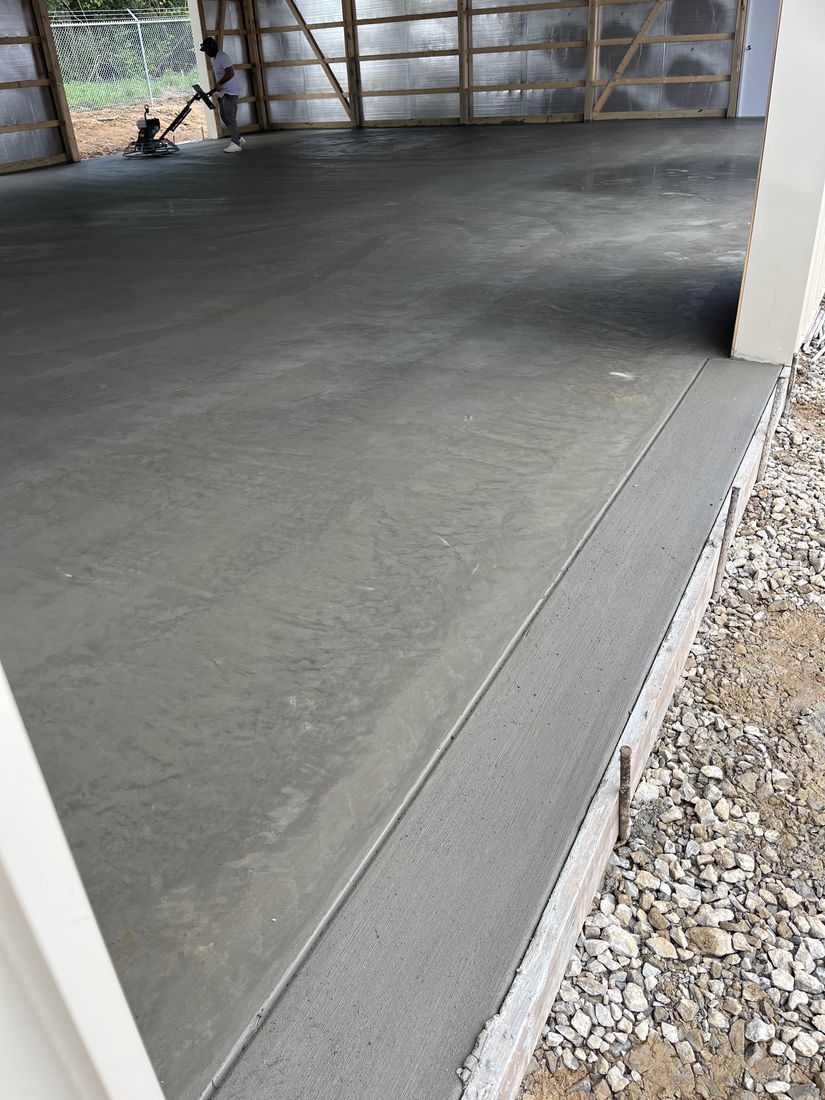
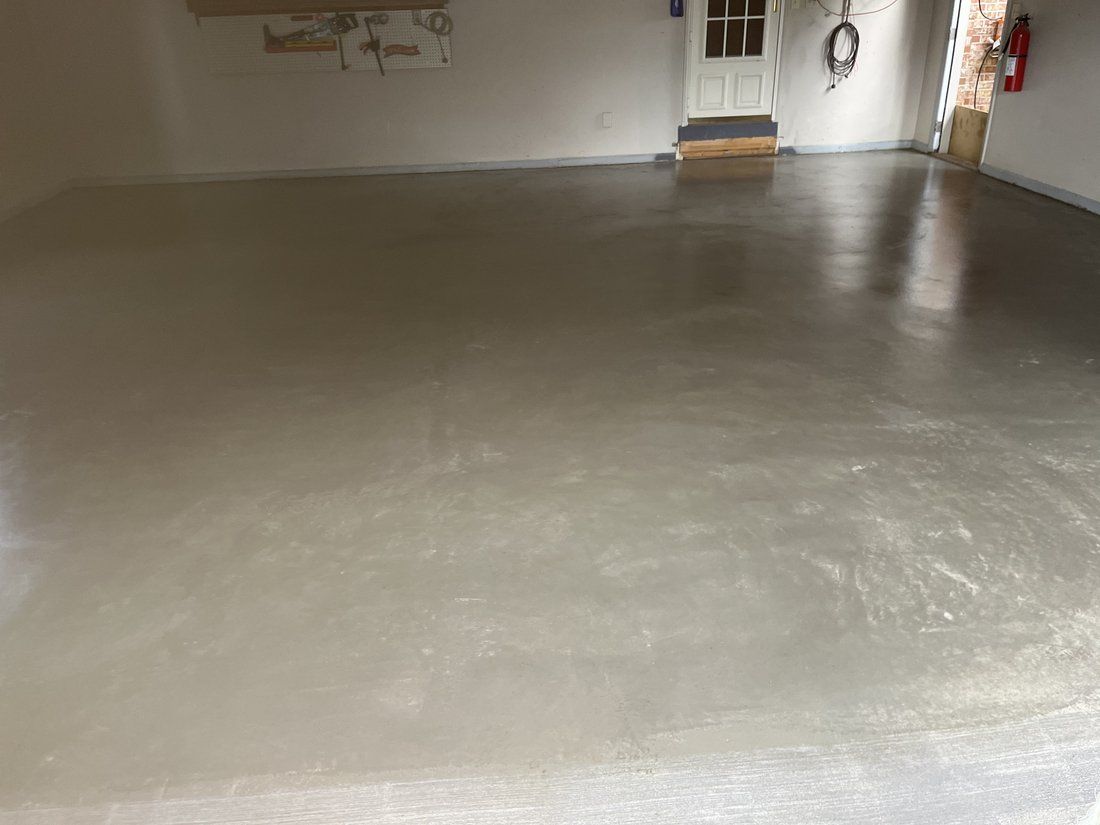
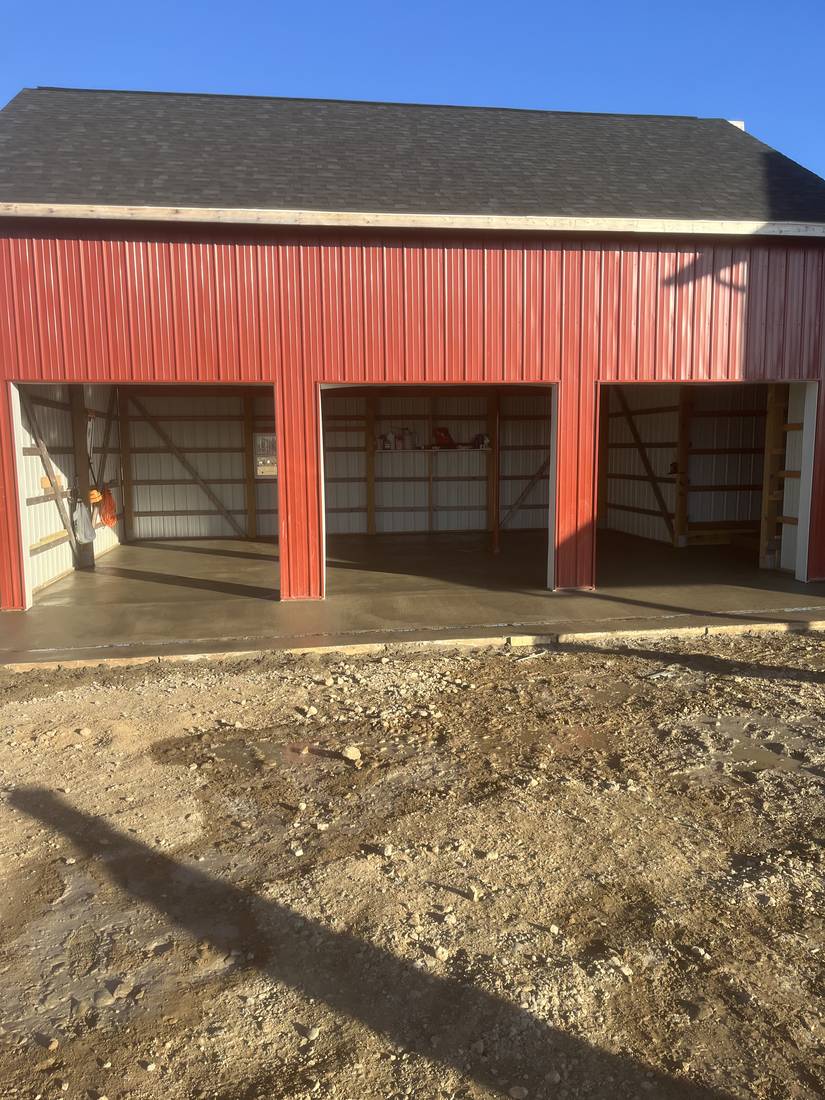
- Garage, shop and pole barn floors, which are inside and out of the weather
- Kitchens, baths, flooring and interior work
- Decks, fences and exterior repairs in workable weather
- Snow removal, which is the actual winter trade
- Estimates and spring scheduling, which cost you nothing in January